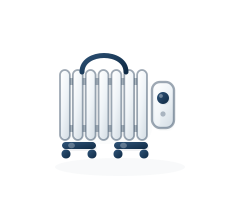
“Space heater” covers two very different objects. A ceramic or fan heater is a small plastic box you can carry with one hand. An oil-filled radiator looks like a row of metal fins on wheels, and it’s a good deal heavier than it looks.
When a heater should go
Space heaters work hard and sit close to furniture, so it pays to retire one at the first sign of trouble:
- The cord, plug or outlet gets warm, or the cord is cracked or frayed
- It smells of burning after the first few minutes of a season’s first run
- The tip-over switch no longer cuts the power when the heater is tilted
- The thermostat no longer holds a setting
Ceramic and fan heaters
Let it cool, unplug it and wrap the cord. That’s the whole job. On its own, a space heater starts at $80; on a pickup that’s already happening, it adds only $25.
Oil-filled radiators
An oil-filled radiator is a sealed unit: the oil is permanently inside and is never drained. Leave it sealed. The things that matter are its heat, its weight and its casters.
Let it cool completely. The oil holds heat long after the radiator is switched off. Unplug it the evening before.
Plan for the weight. Larger radiators often weigh fifty pounds or more, and the small casters don’t cope with steps, thresholds or carpet edges. Mention an oil-filled radiator when you book.
Keep it upright. Carry and store it the way it stands, fins vertical.
If the radiator was stored with its casters in a bag, put them back on before the pickup; it’s much easier to roll to the door on its own wheels.
Space heater checklist
- Unplugged and cool to the touch
- Cord wrapped
- Oil-filled radiator left sealed and upright
- Casters on, if they came off for storage
- Oil-filled radiator mentioned when booking
- Added to a pickup with anything else going